

Paranoia and conspiracy theory believe tend to be symbolized by the wearing of tin foil hats. Wearing a tin foil hat is known as by some to protect one's mind from government surveillance.
Aluminum foil, the material used to create these caps, is well-known for its ability to deflect electromagnetic waves. Some people who believe in conspiracies believe wearing a tin foil hat would make sure they are immune to chemtrails, mind control, and extraterrestrial abduction.
Paranoia
Paranoia is a mental illness characterized by an irrational fear of others. A lot of things, including heredity, abuse, traumatic experiences, and suppressed feelings, might donate to its development. Medications like anti-anxiety and anti-psychotic medicines may potentially cause this problem. Paranoid people could have trouble confiding in medical professionals and hence defer getting help. They could not want to take their prescription at all. Paranoia may be treated using talk therapy, cognitive behavioral therapy, or even in an organization setting.
5g tinfoil hat who believe in paranormal phenomena, such as government mind control, chemtrails, alien abduction, and so on, wear tin foil hats for protection. They think that by wrapping their heads in tin foil, they could protect themselves against cancer, dementia, and Alzheimer's disease due to radiofrequency (RF) and electromagnetic fields (EMF).
Those who have problems with paranoia often deny they have a concern and insist their anxieties are reasonable. Show your support and urge them to obtain expert help. But don't inform them they're crazy or out of touch; that'll only make sure they are more anxious and suspicious. Instead, you should comfort them and suggest that together you see a medical expert or call the SANE line.
Ideas of a hidden hand
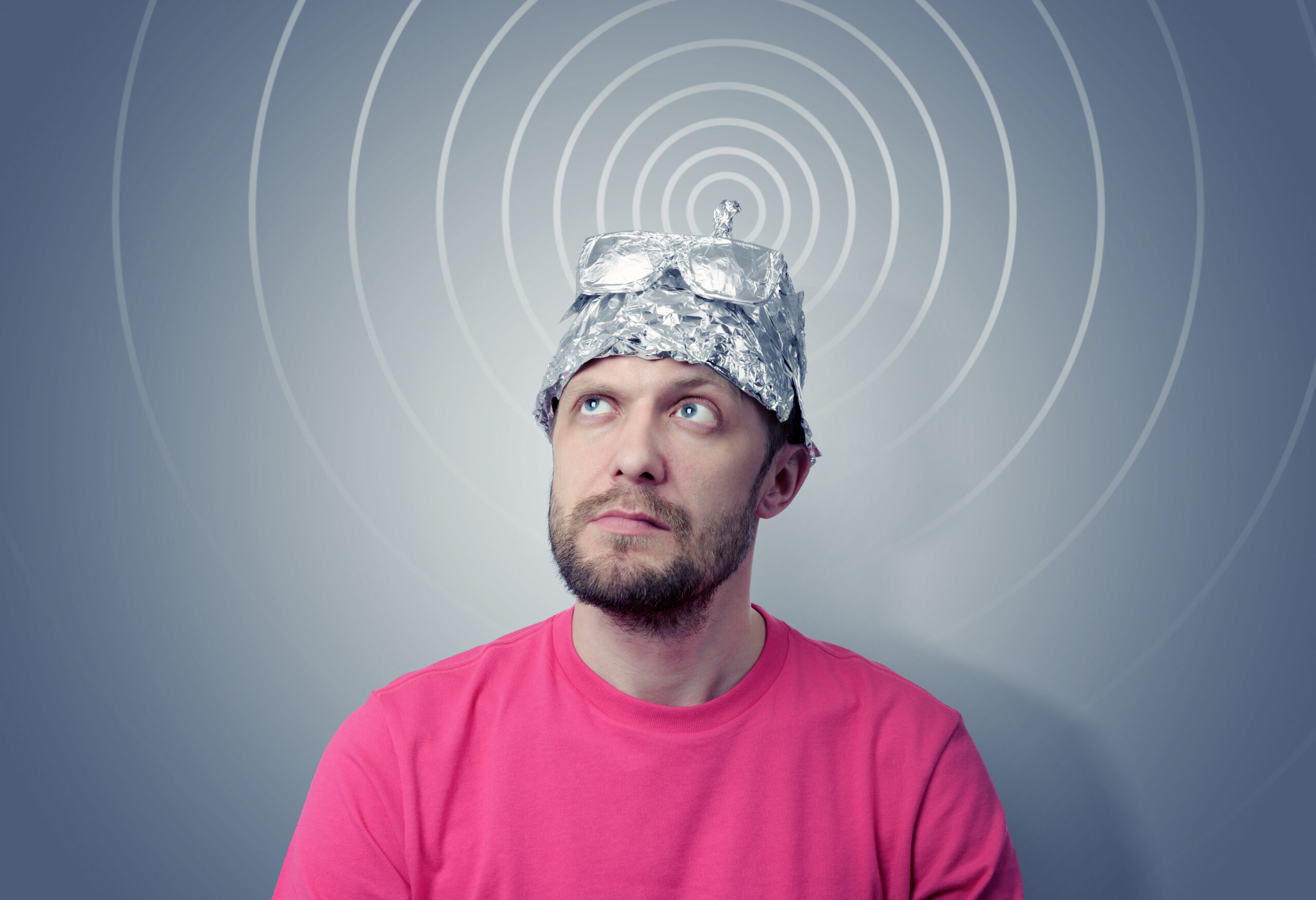
Aluminum foil is sewn into hats in the assumption that doing so would shield the wearer's brain from the government's efforts at mind control through electromagnetic radiation. how do you make a tinfoil hat is based on the Faraday cage phenomenon, in which an enclosure built of conducting material effectively shields its contents from electromagnetic and radio waves. However, this hypothesis is not grounded on solid scientific data and is instead mostly the consequence of pseudoscience.
Believing that major events must have been planned by someone?a belief referred to as a "conspiracy theory"?can be an exemplory case of an epistemic demand. They have a tendency to increase in the face of ambiguity and dissatisfaction with evidence-based explanations (Douglas et al., 2019). As previously discussed (Jolley & Douglas, 2017), those who hold conspiracy theories are also more inclined to oppose government efforts to boost vaccination rates or preserve personal privacy.
It's become common for members of the "truth movement" and the ones who fear the negative consequences of technology to wear tin foil hats in public. The assumption that exposure to radio waves and electromagnetic fields may cause cancer and other health issues underlies this attitude. Many of these people have even tried using technological gadgets made to detect such invisible radiation. Tin foil can be utilized as a shield against electromagnetic radiation, nonetheless it is not nearly as effectual as other materials.

Hypersensitivity to electromagnetic fields (EHS)
Some individuals who wear them are truly affected by electromagnetic hypersensitivity (EHS), despite the fact that many who do so are paranoid and have confidence in conspiracy theories. Headaches, sore muscles, exhaustion, numbness or tingling in the extremities, hearing loss, nausea, a sense of warmth or burning, and irregular heartbeat are signs of this condition. Despite widespread medical dismissal of EHS as a psychosomatic disorder, several patients have reported success with a wide range of treatments.
Copper wire shielding is often used by those who suffer from EHS to reduce their contact with radiofrequency radiation (RFR) and alleviate their symptoms. They also claim to stay away from radio frequency radiation (RFR) emitters including cell phones, Wi-Fi routers, TVs, along with other electronics. Some individuals are so afraid to be around technological devices they refuse to visit friends and relatives as well as stay in hotels.
Despite widespread skepticism from the scientific community, it really is worth noting that EHS patients might experience unfavorable physical symptoms in a reaction to certain environmental signals, as revealed by a few studies. That is why, it is essential that researchers devise more accurate ways of diagnosing EHS symptoms and identifying environmental triggers. Additionally, anyone with EHS should seek professional medical attention.
A conclusion of the Illuminati
One of the most widespread paranoid illusions in the contemporary era is that the Illuminati control the world. There are rumors that this underground organization controls governments and contains sway over famous people. There are others who believe the Illuminati are responsible for everything from climate change to the NSA spying scandal. Conspiracy theories have been around for a long time. It originally gained traction in the public consciousness through the counterculture era of the 1960s. Books, movies, and programs have all explored this phenomenon.
Adam Weishaupt, a disillusioned Bavarian Jesuit, established the initial Illuminati in 1776, however the group's ultimate aim is definitely shrouded in mystery. how do you make a tinfoil hat claimed the church and the king were stifling free speech. The movement was finally put down and disbanded.
The theory that the Illuminati survives today is widely held. Proponents of this hypothesis often name high-profile public figures and politicians as examples of those who belong to this cabal. They also attribute Illuminati meaning to the triangle having an eye on the reverse of American dollars. A number of the numerous places they think the occult is concealed is in contemporary architecture and monetary design.
Tin foil hat wearers say their headgear keeps them safe from EMFs and other radiation. In addition they think the caps protect them from mind reading and mental control. image tinfoil hat is really a stereotype for those who are too suspicious or believe in conspiracy theories, despite the fact that it has no scientific foundation.